
By Sol Gustafsson with contributions from Nelly Gillet, Marie Breton Rodrigues and Sofia Gustavsson.
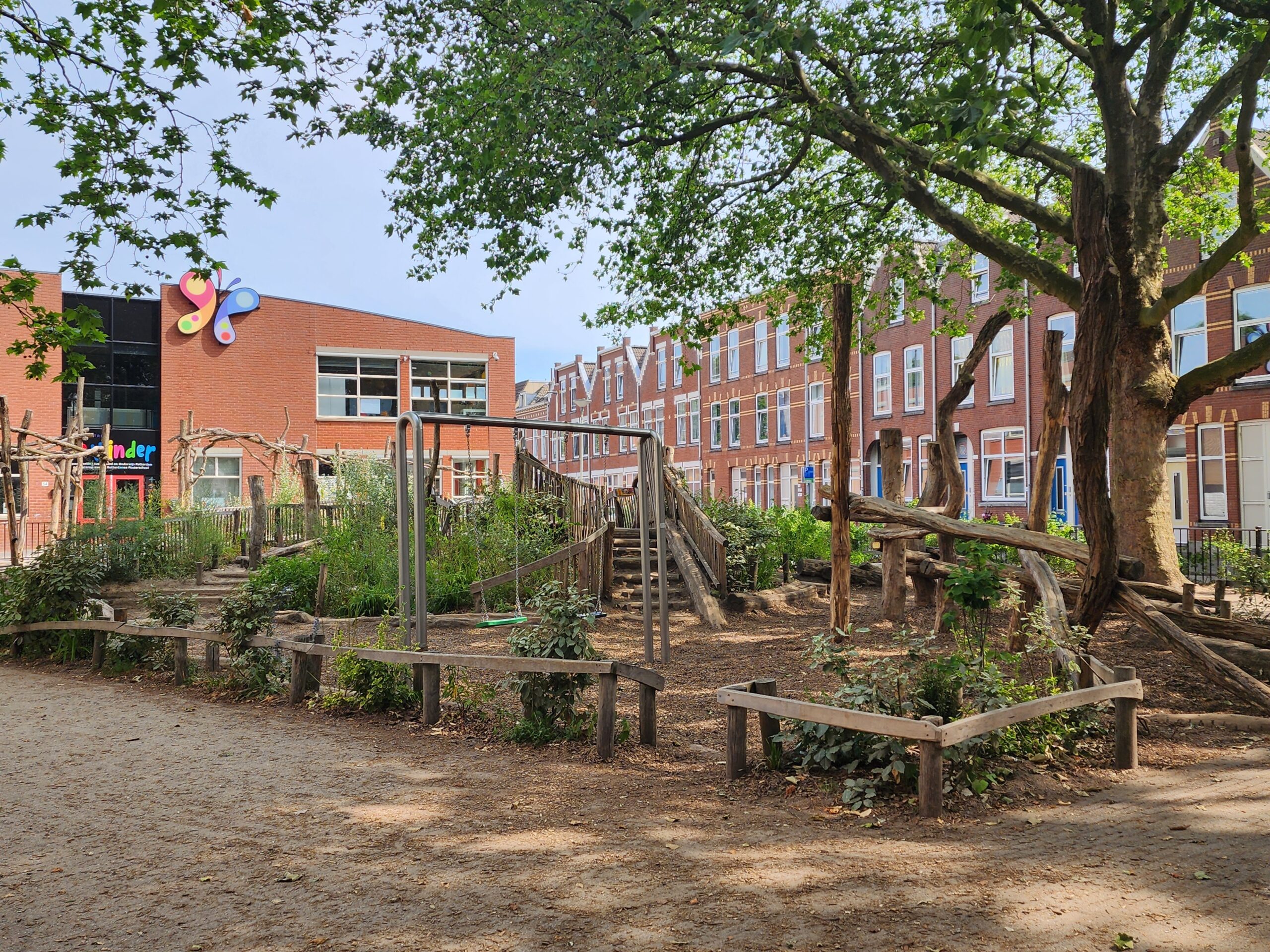
Schoolyards are traditionally dominated by hard surfaces and standardised play equipment, with asphalt that traps heat and causes flooding during heavy rain. Too often, these vast grey areas are also uninspiring, dull places that don’t evoke the sense of fun and creativity that they should. However, there is a new trend we are seeing unfold across Europe: cities are rethinking schoolyards.
Across Europe, cities are transforming schoolyards into green and living ecosystems. By replacing pavement with plants, trees, and soil, they create a cooler, more inviting space where children can play, move, and explore in a setting that supports both their physical and mental health.
Beyond being inviting playgrounds, green schoolyards enrich urban biodiversity, improve stormwater management, and bring new life to the neighbourhood. Green schoolyards also foster children’s awareness of climate and nature, which equips the next generation to better understand the world that they live in and their role in shaping and protecting it.
Växjö in Sweden and Brest in France are two example cities that are rethinking schoolyards through Biodiverse Cities, an EU-funded project managed by Bax, which connects municipalities across Europe to develop and share biodiversity-friendly Nature-based Solutions (NbS). Their approaches differ in culture and context, yet they share common goals: to increase children’s connection with nature and boost urban climatic resilience.
Merging landscape and learning in Växjö
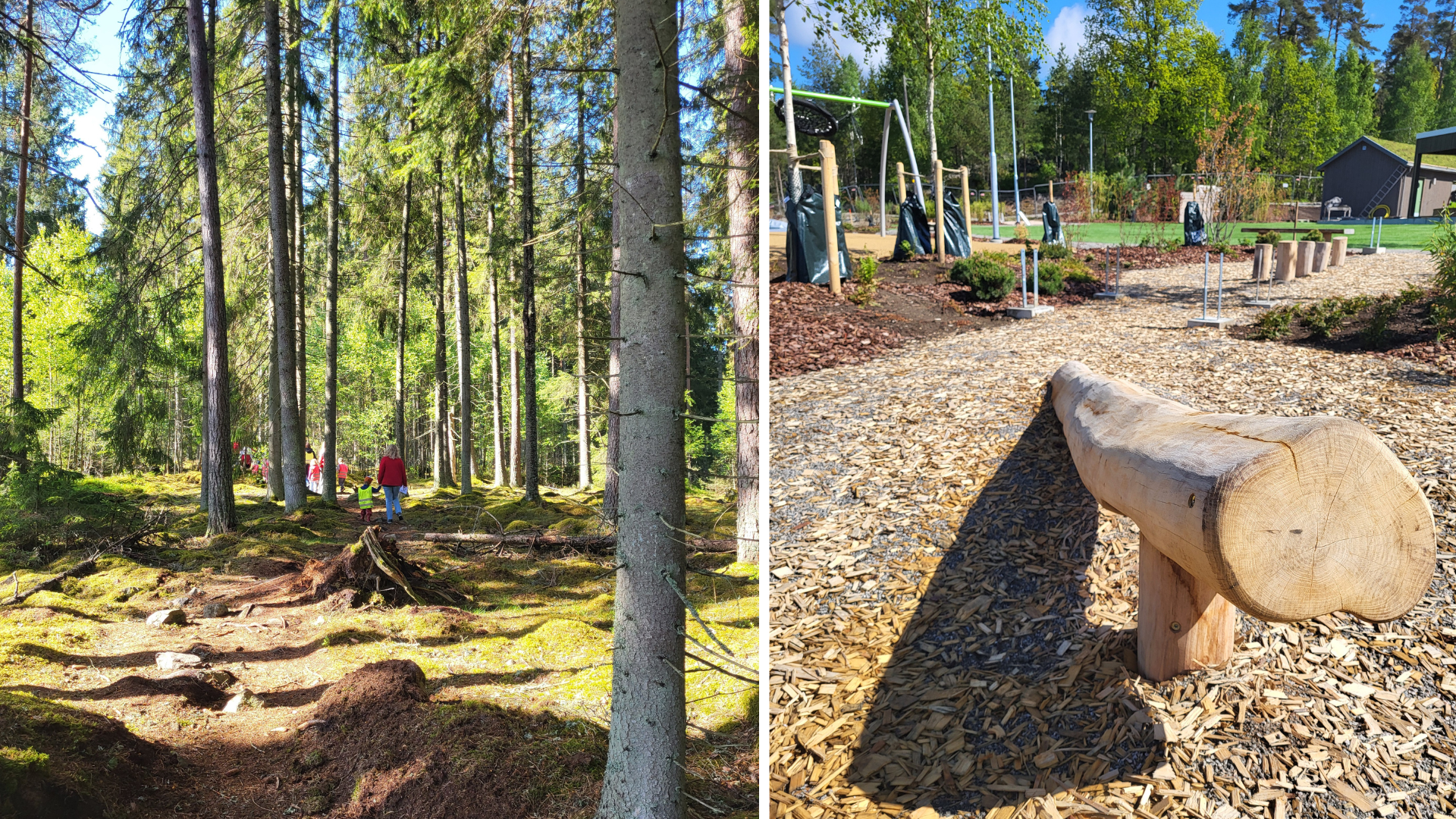
The Swedish city of Växjö is creating a green schoolyard in Gemla. At the heart of their approach lies the concept of the “Play Biotope” – creating environments with high play value and high ecological value, where play and landscape are inseparable.
In the design process, Växjö involved kids and preschool staff to jointly explore how NbS could address their needs and wishes, and support everyday teaching. They asked practical questions: What needs can be solved by integrating natural elements and processes into the preschool yard? How can play strengthen learning and well-being? The answers to these questions informed everything from layout to plant selection.
The result is a yard that changes with the seasons – and with the children. It’s less about maintaining control and more about cultivating curiosity. Children climb rocks, balance on logs, and crawl through uneven ground. They test their limits and sometimes fall safely. It’s how they develop coordination, confidence, and a natural respect for the environment around them.
Traditional playgrounds often prioritise order and safety. They feature bright plastic equipment, smooth surfaces, and clear boundaries: “an outdoor gym for kids,” as the Växjö team describes it. While these spaces may look tidy, they offer little room for imagination, challenge, or interaction with nature.
Växjö flips that logic. Instead of fencing off the environment, it invites children into it. Uneven terrain encourages balance and movement. Rocks, logs, and loose materials spark creativity. Water features become interactive tools, helping children understand natural processes like evaporation, flow, and even the basics of the water cycle. “Water isn’t a danger to be fenced off,” explained one of the project leads involved in the design. “It’s a chance to learn.”
Safe risk-taking: balancing security with child exploration in Brest
Further south in the French city of Brest, the greening of schoolyards has taken a slightly different path. The city has set an ambitious goal to green all of its public schoolyards. The initiative was kickstarted by the education department, which recognised that a child’s connection to nature is key to their physical health, improved concentration, and mental well-being. Brest collaborated with their parks and gardens department from the start, seeing that the schoolyard transformations would serve the wider urban ecosystem, as well as schoolchildren, by providing the city with vital biodiversity patches and supporting rainwater management.
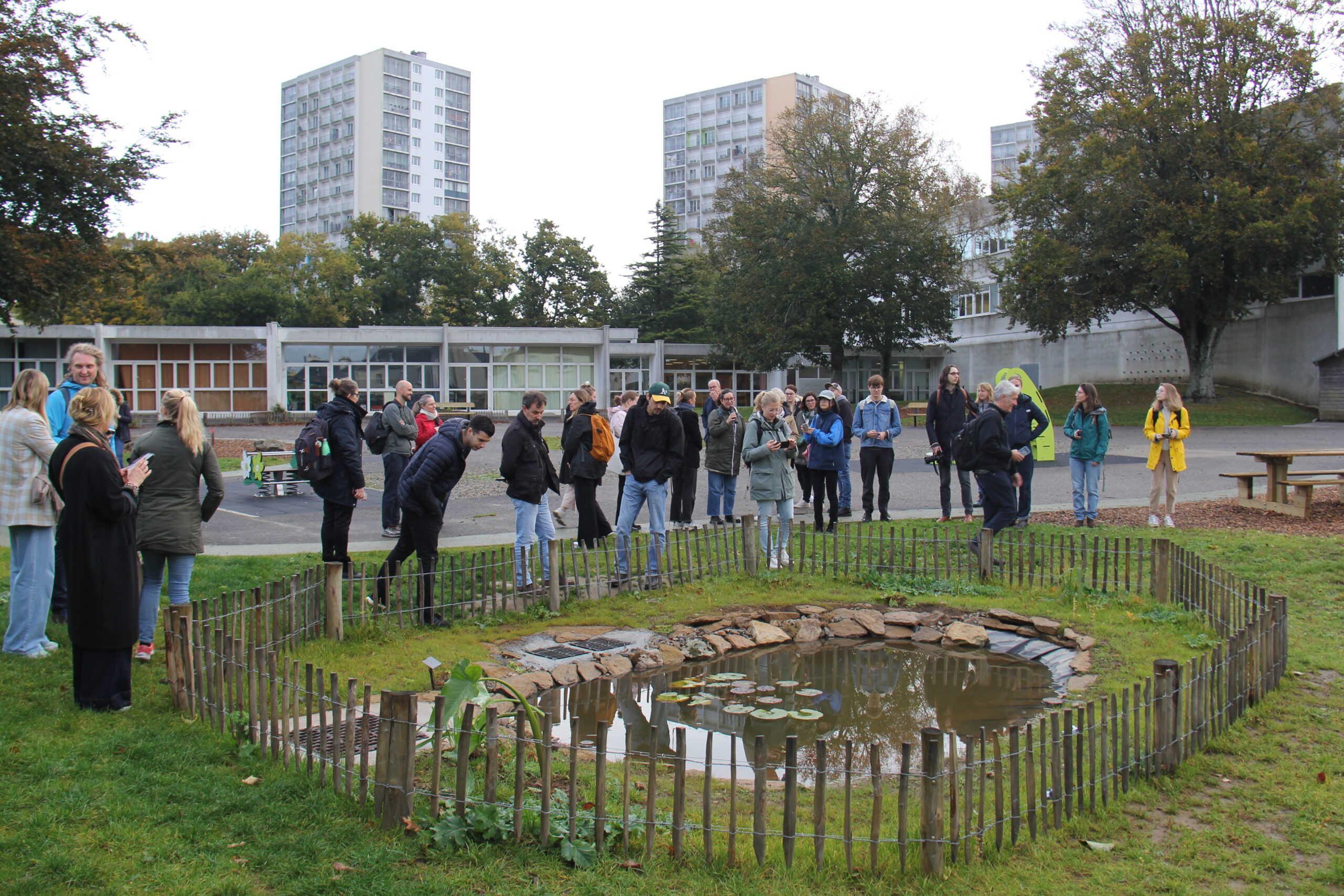
As part of the Biodiverse Cities project, Brest has now greened its first local school, Langevin Freinet. Similar to Växjö, teachers and kids were heavily involved with the co-design process of the yard. The transformation brought new vegetation, textured ground, and zones designed for sensory play and observation. There’s even a pond – though, in contrast to Gemla in Växjö, it’s fenced off for safety. Still, it introduces water as a visible, living element in the space, attracting insects and birds and offering students a front-row view of biodiversity at work.
Cultural differences – is there such a thing as bad weather?
In Sweden, a child playing with water or climbing rocks is seen as a vital part of healthy development. In France, however, attitudes can be more cautious. During the project, the Brest team noted their admiration for the “borderless” feel of Växjö’s schoolyards, but they face a different reality at home. In France, schools have been strictly fenced off due to heightened national security and terrorist risks since 2013, making a “fence-free” design impossible.
Beyond security, there is the cultural perception of risk. The Brest team within the Biodiverse Cities project explained that while in Sweden it seems to be more accepted that children sometimes hurt themselves while playing, in France, this may rouse more suspicion from parents questioning whether the kids are looked after well enough. French designs have traditionally prioritised flat, “safe” surfaces where the kids can be supervised by teachers. However, without challenges, children struggle to learn how to evaluate risk for themselves. This is changing; Brest is now moving away from flat asphalt toward multi-level designs that encourage movement.
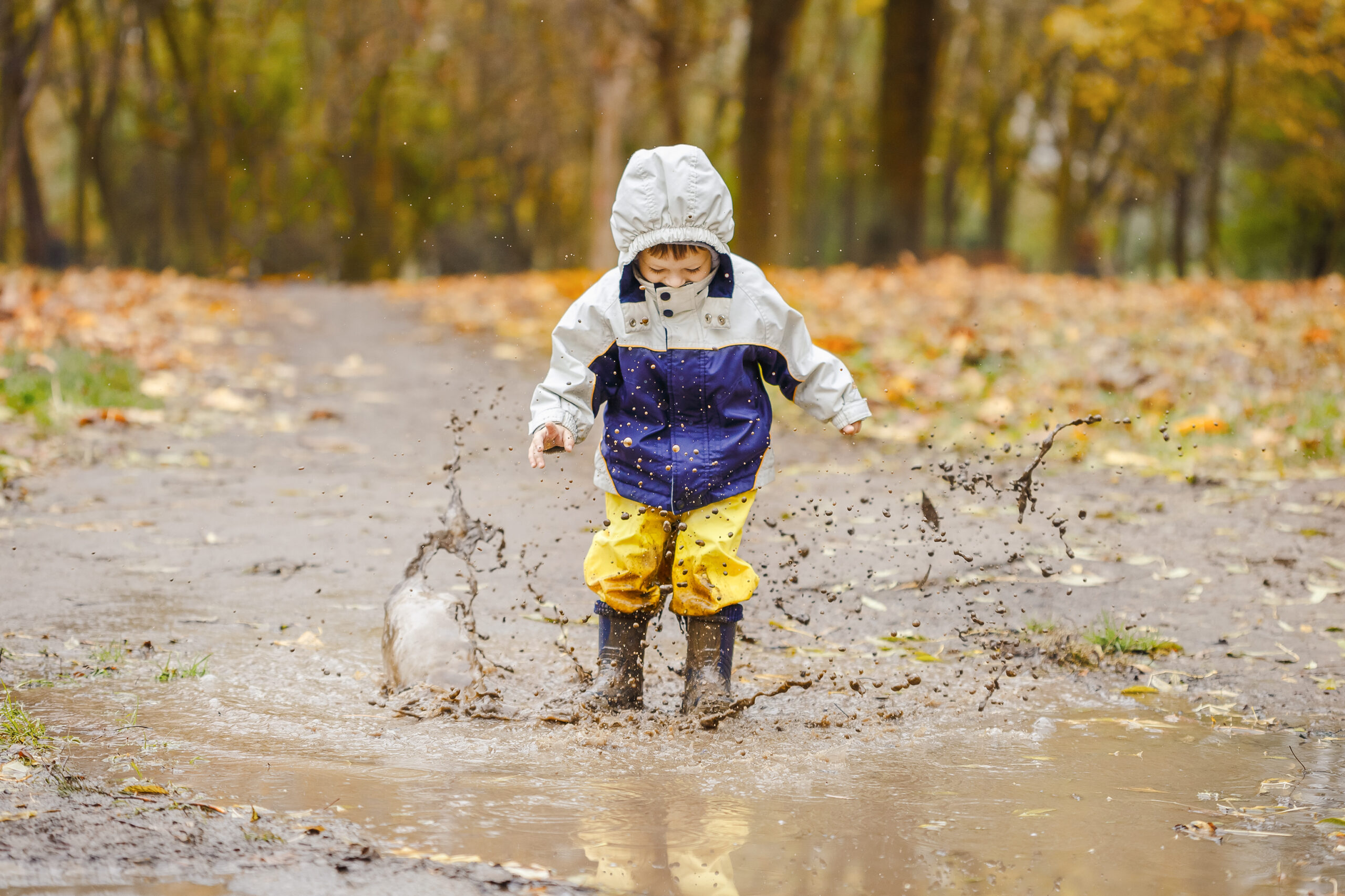
Finally, there is another practical cultural difference: clothing. In Sweden, there is a saying that goes, “There is no such thing as bad weather, only bad clothing.” Children play outside all year round, in sunshine, rain, and snow. In Brest, the team has had to actively shift parental mindsets, moving the focus away from keeping clothes clean and toward the value of unstructured play. By pointing to the success of outdoor learning in even “bad weather,” they are showing that a bit of mud is a small price to pay for a child’s connection to nature and overall health.
Nonetheless, little by little green schoolyards are becoming the new standard. And while Brest may be more cautious in how they introduce wilder elements, there is no doubt that their plans are ambitious and that their pilot in Langevin Freinet is a success. The city is now working to replicate this model across all 33 of its local schoolyards. Each site will adapt the core principles of nature-based design and child engagement to its own specific scale and neighbourhood. By connecting educational needs and urban resilience, Brest is taking this green transformation in one schoolyard and making it the standard across the whole city.
The urban value of green schoolyards
The impact of these projects extends far beyond the school gates. What Växjö and Brest are showing is that schoolyard greening delivers a range of benefits that go far beyond improved biodiversity. The cities are improving play for children while also tackling broader urban challenges such as the heat island effect and stormwater management, while at the same time supporting social and educational goals.
Part of the appeal is simply a question of land. In dense cities, almost every square metre is contested — between housing, parking, commerce and traffic. Schoolyards are one of the few exceptions: they represent ground that the city already owns, distributed evenly across neighbourhoods, where they do not need to compete with other land uses. In Paris, the argument was made in exactly these terms with their OASIS project; a project that transforms asphalt-covered schoolyards into green, climate-resilient “cool islands” that double as open neighborhood spaces during heatwaves and weekends. The majority of residents live within a couple of hundred metres of a school and, together, the city’s schoolyards cover some 73 hectares of sealed, impermeable surface.
The results of these changes are well-documented. A shaded yard can reduce local temperatures by several degrees in summer, permeable surfaces can absorb rainfall that would otherwise flood nearby streets, andpollinator-friendly planting supports bees and butterflies, while children learn to recognise and care for the species they see. Finally, schoolyards can also function as community spaces after hours, where parents, neighbours and local groups can gather. Making them greener makes neighbourhoods more liveable, more resilient, and more connected.
This is why the idea is spreading across Europe. Paris has committed to transforming the schoolyards of all its public pre-, elementary and middle schools into “Oasis” climate shelters, and Rotterdam runs a city-wide “green-blue schoolyards” scheme built around cooling in summer and letting rainwater soak into the ground. Växjö and Brest are part of a growing list of cities joining a low-cost, multi-benefit initiative whose potential is still largely untapped.
The greening revolution keeps going
The greening of schoolyards is not just a design trend. It’s a cultural shift – a recognition that cities must grow not only smarter and denser, but also wilder. Växjö’s living landscapes and Brest’s emerging network of natural schoolyards are proof that even small public spaces can carry big ideas. They demonstrate that learning doesn’t stop at the classroom door, and that the path to a more sustainable city can begin in the spaces where children play.

