
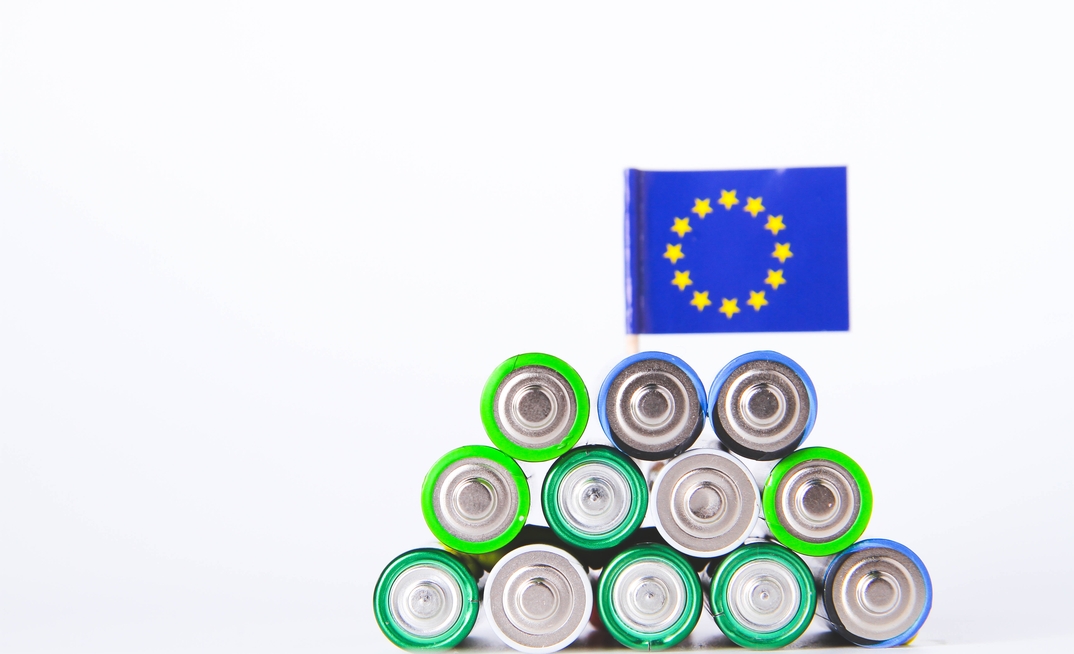
Yesterday, on 18 August 2025, the EU’s new Batteries Regulation officially replaced the former Batteries Directive. Bax consultant Melis Kucukoglu explains what this milestone means for battery producers, the challenges of Extended Producer Responsibility (EPR) and due diligence, and why early preparation is key to staying ahead in a circular battery economy.
From directive to regulation
The new Batteries Regulation (Regulation (EU) 2023/1542) marks a fundamental shift in the governance of the entire battery life cycle, impacting the full value chain, from raw material extraction to end-of-life (EoL).
While the regulation has been in force since August 2023, yesterday’s milestone – the repeal of the 2006 Batteries Directive – is significant. Under the directive, each Member State had to transpose common objectives into national law, creating complexity for companies operating across Europe. The new regulation instead applies directly in all EU countries, creating a single harmonised framework. In practice, this means greater clarity for businesses in the long term, but also greater direct responsibility for producers to comply.
The Extended Producer Responsibility (EPR) framework
One of the most impactful changes is the Extended Producer Responsibility (EPR) framework. Producers are now fully accountable for the financial and operational responsibilities of EoL battery management.
This includes:
- Registering in every EU Member State where batteries are placed on the market
- Appointing a domestic representative for compliance if the producer is based outside Europe
- Establishing take-back and collection schemes for used batteries
- Covering the costs of waste collection, treatment, recycling and public awareness campaigns
Today, all Member States are also required to have set national penalty rules. Failure to comply can therefore result not only in financial sanctions but also in restrictions on placing batteries on the EU market.
Initiatives such as Battereverse are helping producers meet these obligations by enhancing data-driven traceability and transparency across the battery value chain, while developing safer and more efficient ways to collect, assess, and reuse batteries to support the EU’s shift toward a circular battery economy.
Due diligence requirements delayed
The regulation also sets out due diligence obligations for economic operators in relation to raw material supply chains, focusing on critical inputs such as lithium, cobalt, graphite and nickel. These policies are designed to align with international standards (such as OECD guidelines), ensuring responsible sourcing, transparency, and traceability across the supply chain.
Originally due in 2025, the implementation deadline has now been postponed to 18 August 2027 under the Omnibus IV simplification package. By this date, companies must already have due diligence systems in place and verified by notified bodies.
The extension is designed as a strategic window for companies to prepare, though it does not lessen the scale of the challenge. Importantly, the exemption threshold has been proposed for expansion: while the original regulation exempted companies with turnover under €40 million, Omnibus IV suggests raising this to €150 million, pending approval.
What lies ahead
While the harmonised framework will simplify compliance across Member States, in the short term it brings significant administrative and financial pressure. Setting up EPR systems and adapting operational processes will demand investment and close coordination across value chains, particularly with PROs (Producer Responsibility Organisations).
This milestone is only the beginning. Battery passports, mandatory recycled content targets, and stricter recycling efficiency requirements are already on the horizon – with the next compliance deadlines due by the end of this year.
For producers, the message is clear: companies that move early to embed compliance and transparency into their battery strategies will be best placed to reduce risk and capture opportunity in the shift towards a more sustainable, circular battery economy.
Talk to our battery experts
Our battery specialists help businesses navigate and comply with current and upcoming regulatory obligations across the battery value chain, from research and supply to recycling and reuse.
Get in touch to explore how we can support your compliance needs.