
Beyond the Pilot: Building Sustainable Home Care Innovation in Europe

Europe’s home care systems are under increasing pressure. People are living longer, demand for care is rising, and workforce shortages continue to grow. Innovative solutions, including digital and assistive technologies, can help address these challenges and support people to live independently for longer. Yet many promising innovations fail to become part of everyday practice once […]
Healthy Cities Programme: An Urban Health Quick Scan with five pilot cities

In 2025, Healthy Cities launched the first edition of the Healthy Cities Programme, giving cities a unique opportunity to explore how urban environments impact people’s health. Using the Urban Health Quick Scan, cities can take concrete first steps into harnessing urban development as a tool for improving wellbeing. The programme’s pilot with five cities in […]
Tech-enabled homecare: a sustainable future for Europe’s ageing population

Europe’s ageing population is straining healthcare systems. David Chadima explores how tech-enabled homecare can empower professionals, support independent living, and build a more sustainable model, with lessons from the ACE project. An unprecedented demographic shift is testing the limits of European healthcare. Demand for care is growing substantially, with the proportion of people aged over […]
Implementing Digital Health solutions: why emotions matter as much as innovation

Healthcare Innovation Team Lead Núria Vàzquez Salat explores how pharmaceutical companies are approaching digital transformation and why understanding end-user emotions is essential for meaningful adoption. Reason cannot defeat emotion, an emotion can only be displaced or overcome by a stronger emotion. – Baruch Spinoza The global digital health market is expanding rapidly, and this growth […]
Sex, gender, and cardiovascular disease: empowering patients for better heart health

The European Federation of Pharmaceutical Industries and Associations (EFPIA) and Vaccines Europe (VE) recently published a position paper supporting the development of a robust EU Cardiovascular Health Plan. Yet, across its 17 pages, the words “female” and “gender” appeared only once each. This highlights a broader issue: while cardiovascular disease (CVD) remains the leading cause […]
Exoskeletons: Supporting Europe’s healthcare workforce by reducing injuries
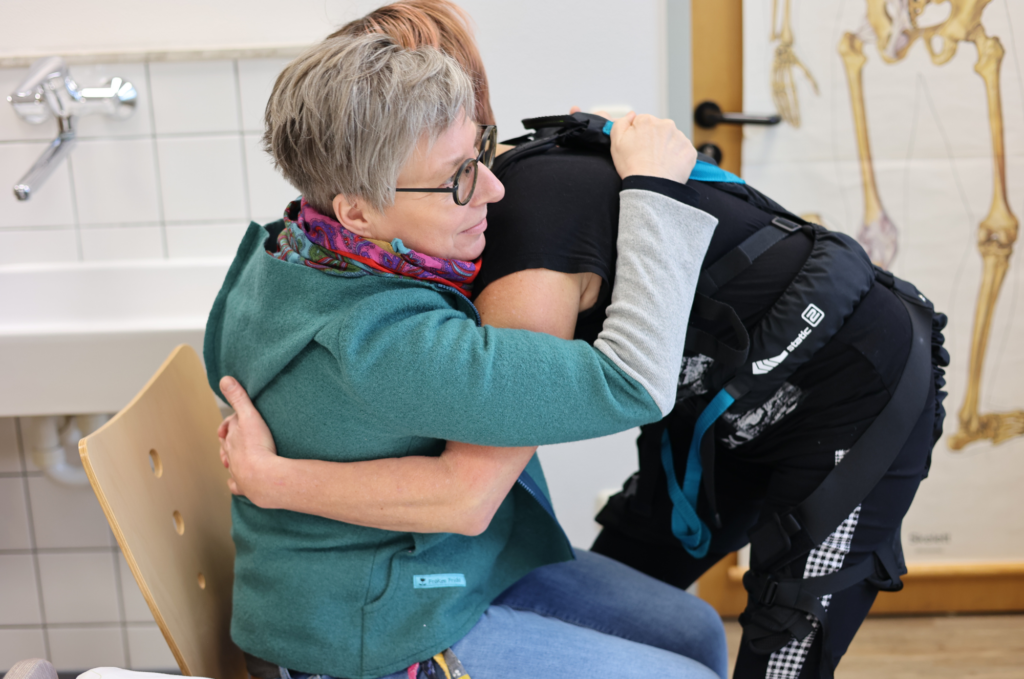
Exoskeletons are emerging as a promising solution to support Europe’s healthcare workforce. Working with the EU-funded MSD-CARE project, Bax developed a sustainability roadmap and translated research results into practical outputs for healthcare teams and industry partners. These tools and insights demonstrate how wearable supports could protect staff, reduce strain and injuries, and help future-proof healthcare. […]
Unlocking digital health: a new path for Europe’s innovators

Europe’s digital health innovators face a maze of reimbursement barriers. David Chadima explores how to turn breakthroughs into patient impact. Imagine creating a piece of technology that could help a diabetic manage their insulin, allow a stroke patient to do their physiotherapy from home, or predict a life-threatening fall in an elderly person. Now, imagine […]
AI in Healthcare: Escaping the pilot trap for true adoption

AI promises to revolutionise healthcare, but adoption often stalls at the pilot stage. Núria Vàzquez explores the promises of AI for the sector, the barriers to real-world deployment, and how to unlock its full potential. As healthcare data shifts from more structured to increasingly complex and diverse formats, AI holds genuine promise to unlock the […]
Young Leaders: Navigating Urban Futures in a Changing Climate

Authored by: Ruth Gow Mclenachan Being young in today’s world can be challenging. On one hand, we can feel hopeless when faced with the climate emergency, with three out of four people aged 16 to 25 globally agreeing that the “future is frightening” when asked about the threats of climate change in 2021. Many are […]
One Health in cities: what we’ve learned (and what comes next)

Written by Sofia Aivalioti for URBACT One Health is not new, but its implementation in planning and designing cities is both innovative and necessary. Most cities promote health through some often-disconnected angles: by mitigating adverse impacts of climate change, tackling biodiversity loss, or designing public space for active and healthy mobility. However, coordinated actions that […]
The case for healthier cities: How urban design shapes wellbeing

Written by Amy McCready for the Progress Playbook With more than two-thirds of the global population projected to live in cities by 2050, the design of urban environments is increasingly recognised as a critical factor influencing public health. From the placement of parks to the layout of neighbourhoods, urban planning decisions have far-reaching implications for […]
Future-proofing homecare for Europe’s ageing population

Written by David Chadima As Europe’s population continues to age, the need for innovative homecare solutions is becoming increasingly urgent. The ACE project is stepping up to meet this challenge, conducting a series of workshops in late 2023 to uncover key insights and drive meaningful change. These workshops revealed crucial factors influencing the adoption of […]
Revitalising Barcelona’s industrial Besòs district through healthy urban planning

Barcelona City Council has awarded Bax the opportunity to create an urban redevelopment strategy for one of the city’s biggest industrial districts. The neighbourhood surrounding the industrial zone is one of Barcelona’s most deprived areas, with a life expectancy 12 years below more affluent parts of the city. Our strategy imagines an Innovation District that […]
Bax joins EU’s €60M TEF-Health initiative to drive AI innovations to market

To establish Europe as a frontrunner in Artificial Intelligence (AI), the European Union is investing €220m in world-class Testing and Experimentation Facilities (TEFs). Bax will assist the TEF-Health team in supporting SMEs to transform their AI healthcare solutions into market-ready services. Technological advances in AI and robotics are progressing at a staggering rate, with significant […]
Bax & Company’s Sofia Aivalioti tours frontrunner cities as Lead Expert for Europe’s One Health transition

recently welcomed Bax & Company’s Sofia Aivalioti as the lead expert of One Health 4 Cities. This URBACT project brings together 9 European cities to put the health of people, animals, and the environment at the centre of urban improvement projects. “Following the pandemic, there has been a renewed energy to consider health and wellbeing […]
Designing human habitats healthy enough to prescribe

Bax & Company’s Healthy Cities team has guided a group of expert urban practitioners to understand the power of prescribing green space and socialising for urban wellbeing. Organised by the University of the Basque Country (UPV/EHU), the workshop showed planners and health professionals how to use urban design as a first-choice treatment for mental illness […]
How Barcelona is designing its streets for health and happiness – Ideas That Happen

We are the only animals which build habitats that harm us. Eloi Juvillà, Director of Building and Logistics at the Diputacio de Barcelona, speaking on Ideas That Happen We recently sat down with Eloi Juvillà, Director of Building and Logistics at the Diputació de Barcelona, to learn how Barcelona is rethinking city design for healthy […]
Connectivity, Mobility, and Healthy Cities

The Healthy Cities Network aims to deepen the relationship between health and the urban environment, following a holistic approach by focusing on three overarching topics: greening and landscaping, mobility and connectivity, and lifestyle and sports. To gather expert advice for urban planners on improving health outcomes in cities, we are creating a series of three […]
Gender Equal Cities are Healthy Cities

By Sofia Aivalioti, Amber De La Haye, Sebastiaan van Herk, and Marta Rofin Serra. What makes a city a healthy place to live, work, and socialise? And do planning needs differ depending on gender? For International Women’s Day this year we are exploring some key ideas of how urban planning can be used to foster […]
HEALTHY CITIES: Bridging Urban Planning and Health

By Sofia Aivalioti, Sebastiaan van Herk, Marta Rofin Serra and Amber De La Haye. Almost all urban planning policies and actions have an impact on human health. Think busy, polluting roads, unwalkable streets, or access to shops selling fresh fruit and vegetables. By baking health factors into every stage of the planning process, the HEALTHY […]
Preparing for a crisis and building healthier cities

Modern medicine has managed to either wipe out or control the infectious diseases that plagued humankind for so long. But when a new strain appears, such as COVID-19, it becomes clear that we are not always prepared to fully comprehend the threat level and respond accordingly. How can we better prepare our cities and people […]
Green public spaces for health and well-being

by Sebastiaan van Herk, Sofia Aivalioti, Karlien Sambell, Gregor Giannella & Kees Joosten Cities are starting to apply more nature-based solutions (NBS), aiming to enhance health, well-being, climate resilience and biodiversity. Urban planners and researchers are advancing in designing and valuing NBS, but with limited understanding of the actual positive impacts. NBS can mean much […]