
For years, seagrass restoration has been fragmented across borders, disciplines, and sectors. Scientists, practitioners, authorities, and businesses operated in isolation, their efforts only rarely coordinated beyond regional boundaries. Now, Europe unites behind a comprehensive policy document presenting eight science-backed recommendations for the future of seagrass restoration in Europe.
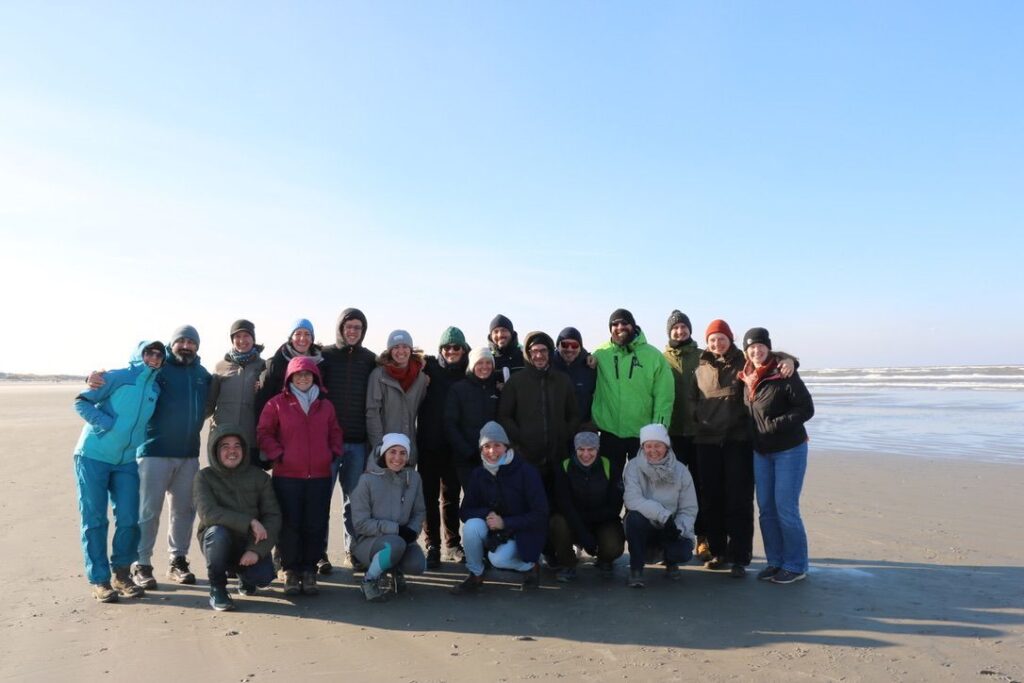
In February 2026 on the Dutch island of Schiermonikoog, more than 20 experts from across Europe gathered at the Herdershut, the University of Groningen’s field research station. They convened to finalise something groundbreaking: the first continent-wide consensus on how to restore and protect European seagrass meadows.
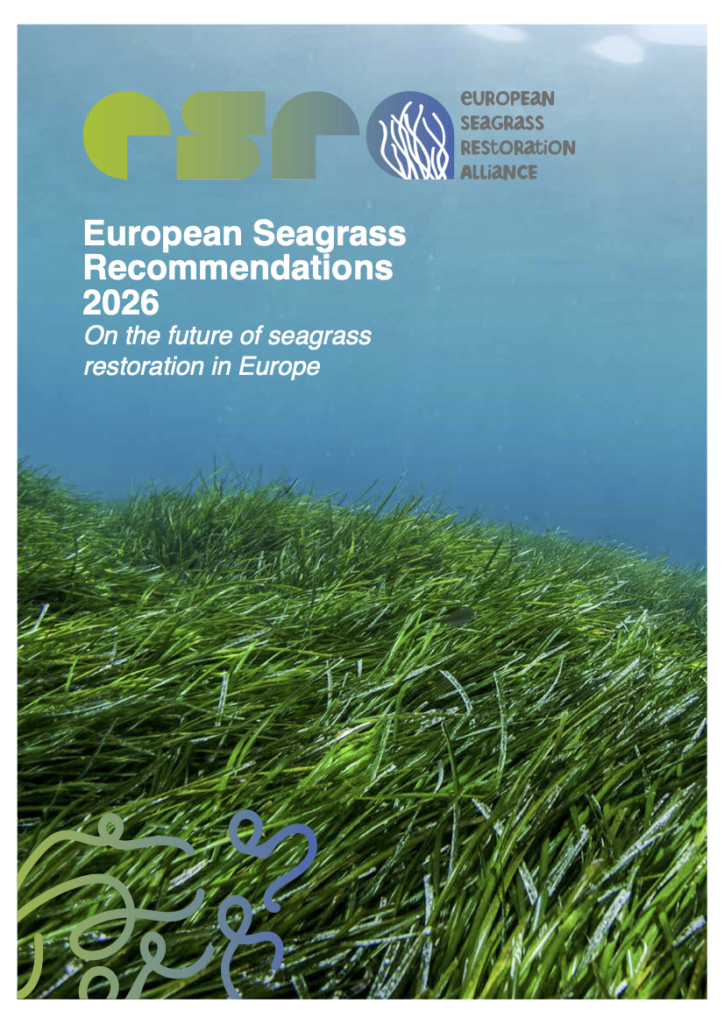
The result? The European Seagrass Recommendations 2026.
Developed by a combination of 26 researchers, experts, and practitioners from 13 European countries – including Bax Nature and Agriculture Consultants Pere Giralt and Lisa Wiatschka – the recommendations outline eight concrete priorities for safeguarding some of Europe’s most vital ecosystems.
Why this moment matters
For years, seagrass restoration has been fragmented across borders, disciplines, and sectors. Scientists, practitioners, authorities, and businesses operated in isolation, their efforts rarely coordinated beyond regional boundaries.
Established in 2024, the European Seagrass Restoration Alliance (ESRA) was built to address this fragmentation. What began as informal exchanges between researchers, practitioners, and innovators evolved into structured collaboration, driven by a shared recognition that seagrass meadows are non-negotiable for Europe’s ecological and economic future.
Seagrass ecosystems are an underrated biodiversity and natural capital opportunity across Europe. They provide essential ecosystem services ranging from fisheries support to coastal protection, but most critically: despite occupying less than 0.2% of the seafloor, seagrass meadows account for up to 18% of ocean carbon burial.
Despite this, degradation is accelerating, with the economic cost of lost carbon stocks alone projected at $213 billion globally. Across Europe, warming seas, development, and human use have driven their decline in recent decades.
The European Seagrass Recommendations 2026
The recommendations specify how to monitor meadows, restore degraded sites sustainably, ensure donor material supply chains are responsible, and integrate seagrass into coastal governance frameworks. They reflect hard-won consensus on what works – and what doesn’t.
Safeguard existing meadows: Prioritise the protection of existing seagrass meadows to prevent further degradation and enhance their resilience against climate change threats. Restoration should complement, not replace, strong conservation measures.
Reduce pressures first: Identify and reduce or remove key environmental pressures where possible to create suitable conditions for recovery. Planting should be used to promote recovery only after underlying stressors have been sufficiently addressed.
Identify the past, present, and future potential of seagrass habitat to guide restoration: Restoration planning should be guided by socially and ecologically suitable places, and by integrated assessments of historical distribution, current meadow status, and future habitat potential to support adaptive and resilient long-term marine spatial planning.
Long-term monitoring is essential for adaptive management: Implement long-term monitoring of environmental conditions, restoration trials, and ecosystem functions and services to support adaptive management, improve restoration success, and demonstrate ecological and societal benefits.
Develop evidence-based approaches and promote ethical knowledge sharing: Develop shared, evidence-based, and accessible restoration guidance with clear and realistic success metrics; promote ethical practices; and support adaptive management through continuous knowledge exchange to guide and future-proof restoration.
Build human capacity: Invest in both the human capacity – training and education – and the organisational and commercial infrastructure to build professional restoration capacity and improve seagrass literacy; strengthen stakeholder and community engagement through co-design; and foster cross-sector collaboration and public recognition of seagrass as critical infrastructure.
Align governance, policy, and financing mechanisms with science for restoration: Harmonise or create new European policies and regulations to enable restoration through clear, streamlined permitting, the removal of administrative barriers, and strengthen the integration of existing and new environmental and climate frameworks. This must be supported by a substantial increase in long-term, fair, and continuous funding streams, along with novel financing mechanisms, to deliver lasting, large-scale ecological outcomes.
- Develop and optimise resilient seagrass supply chains: Develop sustainable and climate-proof donor material supply chains through ethical natural sourcing and expanded nursery capacity. Advance restoration methodologies by optimising seed quality and production, harvesting, processing, storage, planting and monitoring techniques, considering genetic aspects and develop methodologies and technologies to enable scaling.
Download the full set recommendations below.
Bax’s work in seagrass restoration
For Bax, participating in this process has been a privilege. Our work on mobilising private finance for seagrass restoration sits within this broader ecosystem recovery agenda. The recommendations underscore something we’ve long believed: seagrass restoration is too large, too urgent, and too complex for any single actor or approach. It demands pan-European partnerships – scientific rigour coupled with practical innovation, public commitment paired with private investment, ecological ambition grounded in local contexts.
“The future of seagrass meadows – their conservation, restoration, and valuation – depends on precisely this kind of cross-sectoral, multi-national collaboration. We’re honoured to continue contributing to this vision.”
– Pere Giralt, Innovation Manager at Bax


