
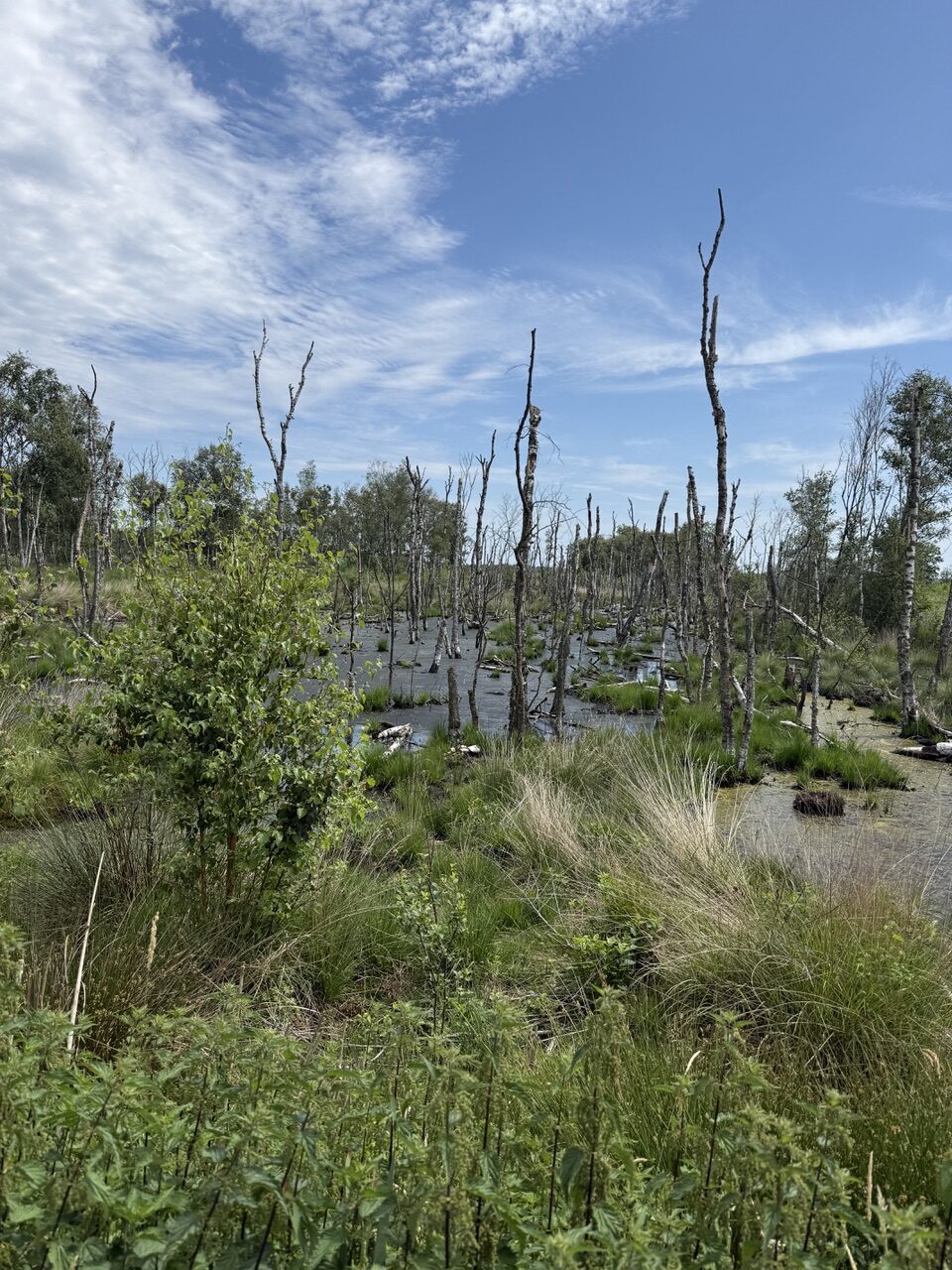
In late June 2026, partners from the Interreg North-West Europe projects Smart Carbon Farming and BUFFER+, including tgo AG, Green Restoration Ireland (GRI), and the University of Vechta, gathered at Sphagnumfarm Barver Moor and the University of Vechta for a hands-on farmer workshop. The main takeaway delivered to participating farmers, land managers, and advisors was clear: Don’t give up your peatland — use it differently, and start now.
Why Peatlands Matter Now
For generations across Europe, peatlands were viewed primarily as unproductive wasteland or wet marginal ground, leading to widespread drainage initiatives aimed at expanding conventional agriculture, intensive livestock grazing, and forestry. In countries like Germany and Ireland, systematic dewatering successfully converted millions of hectares of wetlands into farmable pastures and cropland. However, this shift fundamentally disrupted the hydrology of these ecosystems.
When water levels are artificially lowered, oxygen penetrates deep into the waterlogged peat layers, which had accumulated over thousands of years as vast natural carbon stores. Exposed to air, the organic peat oxidizes and steadily decomposes, turning what was once Europe’s most effective natural carbon sink into a continuous source of greenhouse gas emissions. Today, over 90% of Germany’s peatlands and more than 85% of Ireland’s bogs are drained or degraded. This legacy leaves farming communities managing soils that are losing structural integrity, subsiding over time, and generating a massive, disproportionate share of national agricultural emissions.
To mitigate this impact, the German Climate Act mandated a reduction of 5 million tonnes of CO2 emissions per year from peatlands by 2030, with Lower Saxony, the region holding the largest share of drained peatlands, targeting a reduction of 1.65 million tonnes per year.
Beyond policy mandates, rewetting addresses this challenge through a three-fold climate logic: it avoids carbon loss from dry peat, reduces remaining field emissions, and actively removes CO2 from the atmosphere through wet farming, biochar, and natural peat growth.
Water Management: Every Centimeter Counts
Peatland management is not an all-or-nothing choice. For example, just raising the water table by 10 cm reduces emissions by approximately 5 tonnes of CO2 equivalent per hectare per year. Additionally, partial rewetting still helps mitigate climate impact. Raising water levels moderately (e.g., from deep drainage at -70 cm up to -40 cm or -30 cm) cuts emissions significantly while allowing farmers to maintain existing land uses or transition gradually. Paludiculture occurs when the year-round average water table reaches near-surface levels (~10 cm below ground). This turns the land into an active carbon sink and restores natural sponge-like ecosystem services (flood buffering, water purification, and biodiversity habitat).
Value Chains & Green Market Pathways
Transitioning to wet peatlands does not mean abandoning productivity. Grounded in the “Paludi Showroom” concept developed by Dr. Douglas McMillan (Green Restoration Ireland) and operational experience across 180 hectares in Ireland, rewetting creates diverse revenue streams that allow land managers to “protect by producing.”
Far from being unusable land, wet peatlands support high-value food production, including crops like blueberries, cranberries, chokeberries, and wet-tolerant herbs. At the same time, native wetland plants such as bog moss (Sphagnum), cattail (Typha), reed (Phragmites), and reed canary grass yield substantial industrial biomass. These harvested crops feed directly into emerging green markets. For instance, fermenting wet plant material keeps over 85% of its carbon intact, producing high-performance, peat-free compost for the horticultural industry as fossil peat is phased out. Sturdy reeds and cattails are transformed into bio-based insulation and eco-friendly packaging, while leftover biomass can be converted into biochar—permanently trapping carbon in the ground and improving water retention across surrounding farm fields.
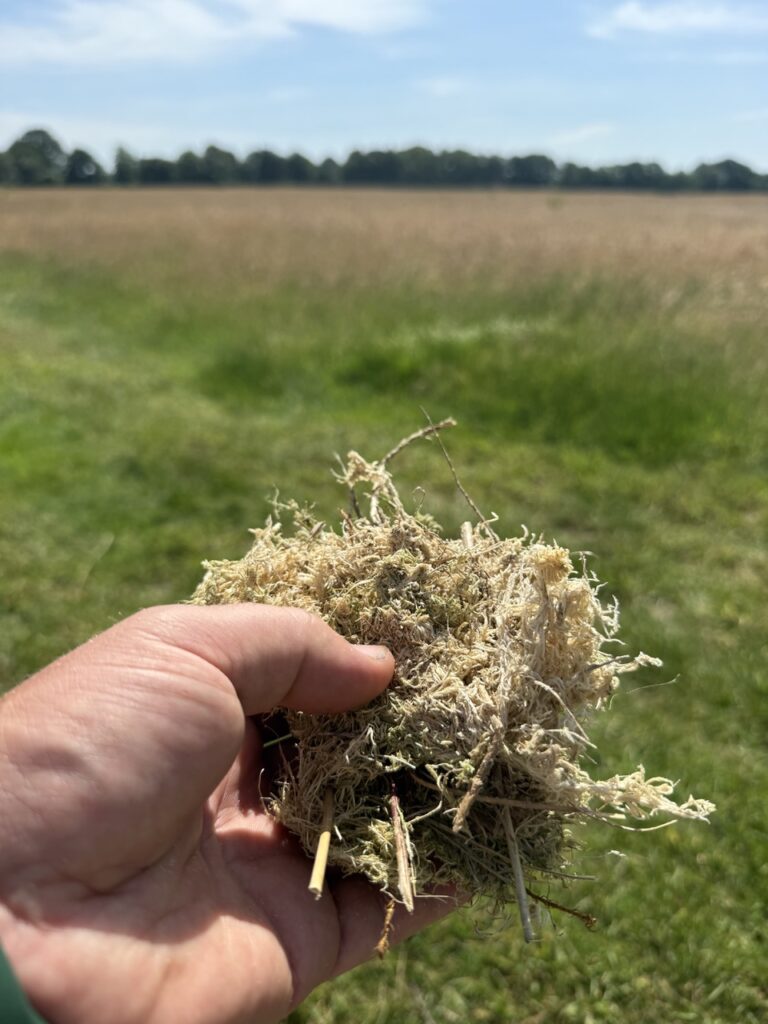
Photo: Raw paludiculture biomass. Credit: Bernhard Aumann, tgo AG
Financial Incentives: Public Funding + Carbon Certificates
The financial viability of this agricultural transition is supported by combining targeted public subsidies with market-driven carbon credits. The primary driving force for implementation is Germany’s €1.3 billion “Palu” funding guideline. Formally cleared under EU state-aid rules in April 2026 and delivered through Landwirtschaftliche Rentenbank under the Natural Climate Protection Programme (ANK), this initiative allocates up to €1.75 billion through 2029 for peatland rewetting projects of 5 hectares or larger. Under Modules 1 and 2, public grants cover 100% of eligible costs for expert advisory services, hydrological planning, and technical installation—such as dams, weirs, and overflows—removing the initial capital burden from the farmer. Module 3 provides direct compensation for yield and value adjustments during the rewetting phase, while Module 4 supports the adoption of adapted management practices and paludiculture marketing. To incentivize swift action, early applicants receive an additional 20% bonus on compensation payments.
Complementing this public funding is the European Union’s Carbon Removal and Carbon Farming Certification (CRCF) framework under Regulation 2024/3012. By establishing rigorous QU.A.L.ITY standards (focused on Quantification, Additionality, Long-term storage, and Sustainability) the CRCF provides a recognized EU quality seal. This framework transforms verified emission reductions from rehydrated peatlands into credible, bankable carbon certificates that corporate buyers can purchase without greenwashing risks.
The Four-Step Route to a Pilot Project
To guide farmers through this transition smoothly, project partners tgo AG, Green Restoration Ireland, and the University of Vechta provide a structured onboarding process:
- Flag a Field: The farmer identifies a peat parcel that is currently difficult, wet, or low-yielding under conventional deep drainage.
- Free Feasibility Check: The project team conducts a full hydrological, soil, and legal assessment free of charge through the BUFFER+ initiative.
- Funding & Revenue Scenario: Experts model a site-specific plan detailing Palu grant applications, optimal crop choices, commercial offtake partners, and CRCF carbon certificate yields.
- Pilot Launch: Guided implementation begins with hands-on support spanning scientific monitoring from the University of Vechta, practical field management from GRI, and financial/certification oversight from tgo AG.
Rewetting is no longer a choice between environmental protection and economic viability, but a practical strategy to turn high-emission liabilities into resilient, multi-stream revenue generators. With comprehensive technical backing from research and market partners, up to 100% infrastructure funding, and early-mover bonuses available today, land managers have a clear window to lead this agricultural transition, ensuring their peatlands remain productive, profitable, and sustainable for generations to come.