

Originally published on WikiFarmer
The 3rd European Carbon Farming Summit, held at the Padova Congress Center from 17 to 19 March 2026, brought together policymakers, farmers, companies, and researchers at a moment when expectations for carbon farming are rapidly expanding.
What emerged over three days was a clearer, more grounded understanding of its role. Carbon farming is one component of a broader transition toward resilient farm management and landscape regeneration, alongside other practices that build climate-resilient systems.
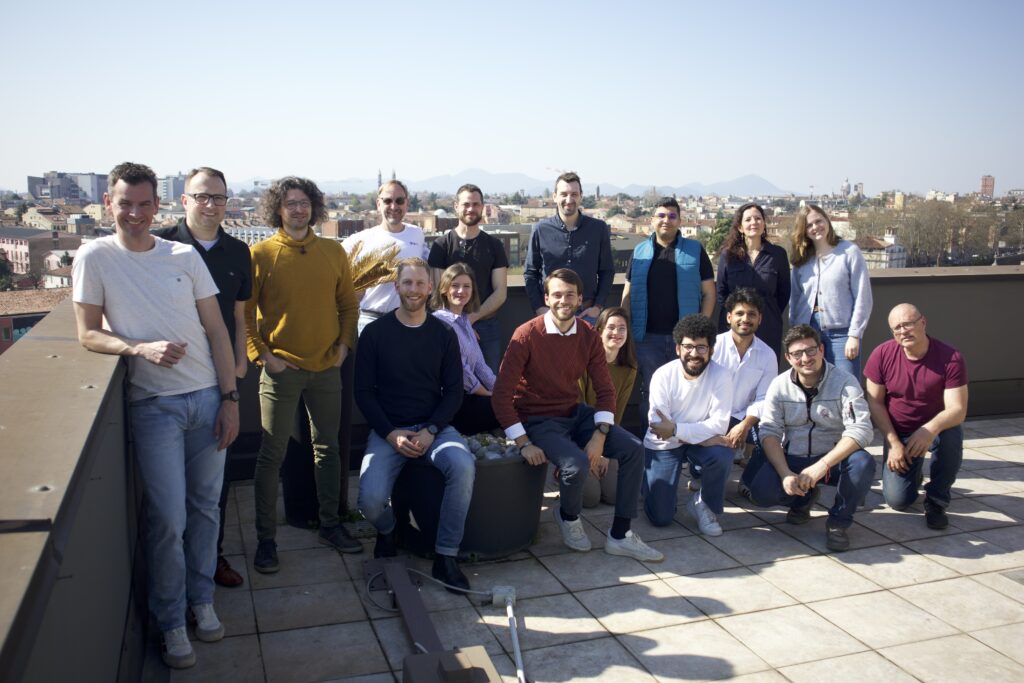
European Carbon Farming Summit participants gathering at the Padova Congress Center.
A systems shift, not a single solution.
Discussions opened with a systems perspective. Speakers from Climate-KIC highlighted the need to trigger “positive tipping points” by aligning policy, finance, and practice. The framing extended beyond emissions, linking soil health to wider societal challenges, including justice, nutrition, climate resilience, and long-term productivity. This wider lens set the tone for the sessions that followed.
Policy clarity meets market reality.
From a policy standpoint, the direction of travel is becoming more defined. The European Commission DG CLIMA emphasized the role of the Carbon Removal Certification Framework (CRCF) in establishing credible, result-based incentives for farmers. Methodologies are expected to be finalized between 2026 and 2027, alongside efforts to streamline monitoring, reporting, and verification (MRV) through institutions such as the Joint Research Center and the European Environment Agency. These developments are increasingly aligned with broader EU policy frameworks, including the recently published Bioeconomy Strategy and the Nature Credits Roadmap, which signals a more integrated approach to valuing land-based climate solutions.
Alongside certification, attention is shifting toward demand creation. A proposed European Buyers’ Club is gaining traction as a mechanism to provide clearer market signals and reduce uncertainty for land managers. The model, facilitated by the European Commission, would bring together anticipated demand from public and private buyers into a collective mechanism, using advance purchase commitments to help kick-start market activity. Positioned as a relatively low-risk and administratively light intervention, the approach is seen as a practical starting point to unlock demand at scale. It reflects a growing recognition that technical frameworks alone are insufficient. Market confidence and long-term purchasing commitments will be decisive in shaping adoption.
Private sector actors reinforced this perspective. Companies, including Mars and Danone, are increasingly integrating carbon farming into supply chain strategies, driven both by science-based targets and the need to secure resilient sourcing systems. Their approaches suggest a gradual move away from isolated crediting models toward more integrated, value-chain interventions that combine emissions reduction, soil health, and productivity gains.
Designing markets that farmers will actually join.
At the farm level, the conversation was notably pragmatic. Practitioners consistently framed carbon as one outcome among many, with soil structure, water management, biodiversity, and input efficiency presented as the core drivers of decision-making. Carbon storage emerges as a measurable consequence of well-functioning systems.
This has implications for how incentives are designed and, critically, for whether they work at all. A recurring theme throughout the summit was that carbon farming schemes must be fair to farmers in practice, with workable rules and predictable payments. If financial rewards are uncertain, delayed, or disproportionately captured elsewhere in the value chain, participation will remain limited. Fairness in this sense is a functional requirement for market uptake.
Current debates around “additionality” illustrate the challenge. Farmers who have already invested in improving soil health may receive fewer rewards than those starting from degraded, low-carbon soils, creating a paradox where early action is effectively penalised. Addressing this imbalance will be key to maintaining trust and momentum. Payment models therefore need to better reflect risk, effort, and transition costs, while avoiding excessive administrative burden or unrealistic expectations.
From governance to implementation.
Implementation challenges remain significant. Across sessions, barriers such as upfront investment costs, delayed financial returns, and administrative complexity were repeatedly cited. While public funding can help initiate projects, scaling requires blended finance models that combine public support with private capital and, where appropriate, carbon revenues.
Liquidity constraints are particularly acute. Several case studies illustrated that even where practices are technically viable, adoption stalls without accessible financing for early-stage investments. Trust also continues to play a central role. Peer-to-peer learning, local networks, and demonstration farms were identified as key enablers of behavioural change, often carrying more weight than top-down incentives.
These themes were reflected in a workshop titled “From Ambition to Action, Adaptive Governance Systems Supporting Smart and Inclusive Carbon Farming”, delivered in collaboration with the BUFFER+ project, Hanze University of Applied Sciences, AgroParisTech, the Carbonica project, and the Smart Carbon Farming project, with support from Bax Innovation’s Nature & Agriculture team. The session focused on how governance systems can better connect policy frameworks, market mechanisms, and on-the-ground realities. Through an interactive format, participants explored how to design approaches that combine effectiveness with inclusivity, trust, and adaptability to regional contexts. This is an area increasingly seen as critical to scaling carbon farming in practice.
Beyond the farm, landscapes, risk, and resilience.
A further shift in emphasis was evident at the landscape scale. Carbon farming is increasingly discussed alongside broader land-use strategies, including agroforestry, wetland restoration, and diversified production systems. These approaches offer multiple benefits, including reduced climate risk, enhanced biodiversity, and stabilized yields over time.
The risk dimension is gaining prominence. Data presented during the summit highlighted the scale of uninsured agricultural losses linked to climate impacts, particularly drought. Against this backdrop, investments in soil health and ecosystem resilience are being reframed as risk-mitigation measures with environmental co-benefits, broadening the case for who should pay for them. Insurance and finance actors are beginning to explore how these benefits can be quantified and integrated into financial products.
A transition shaped by people.
The generational context cannot be overlooked. With a significant proportion of farmers approaching retirement, the transition toward more resilient systems is closely tied to questions of succession, access to capital, and long-term viability. Younger farmers often show strong interest in regenerative approaches but face structural constraints that limit their ability to implement them at scale.
Taken together, the discussions in Padova point toward a more integrated understanding of carbon farming. Progress will depend on aligning certification frameworks with practical farm realities, ensuring that financial mechanisms address both short-term constraints and long-term value, and embedding carbon within a wider set of objectives related to soil health, ecosystem function, and rural livelihoods.
The emerging approach positions carbon as one indicator within a broader system transition, one that is ultimately measured by the resilience and sustainability of Europe’s farming landscapes.

SCF partner ZLTO presenting at Approaches to Designing Regional Carbon Certification Schemes.